
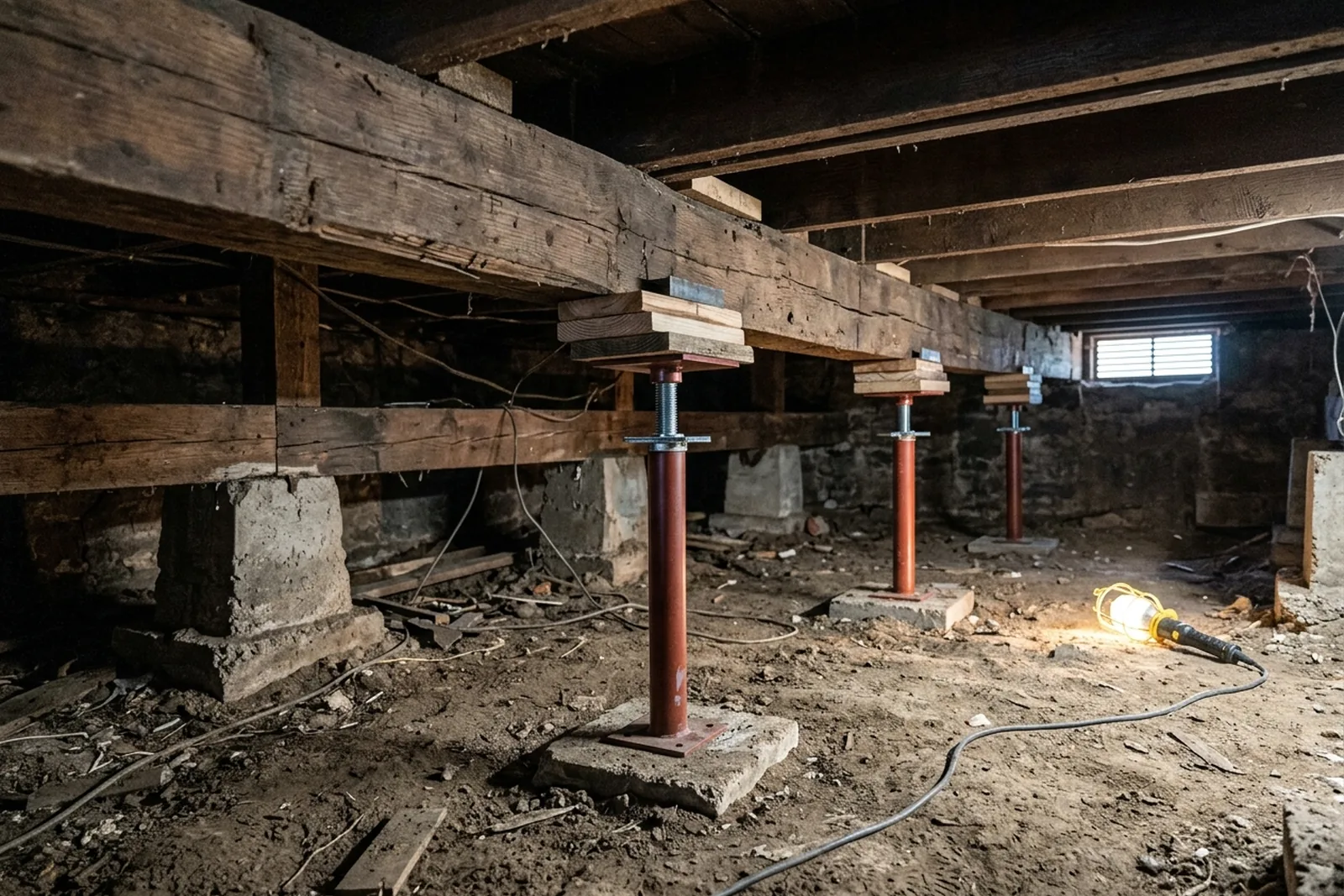
Slidell’s clay soils swell when wet and shrink in droughts, and many lots sit near water. Over time that movement lets piers settle at different rates, and the house goes out of level. House leveling corrects it by lifting low areas back up and resetting or adding supports.
Signs your home is out of level
- Floors that slope or feel bouncy
- Doors that stick, swing open on their own, or won’t latch
- Diagonal cracks in sheetrock at the corners of doors and windows
- Gaps where walls meet ceilings or floors
- Cracked tile or separating trim
What house leveling involves
A technician measures the floor across the whole house to find high and low points. Low areas are lifted with jacks, and supports are shimmed, rebuilt or added so the floor stays level. Damaged sills, beams or piers are replaced. On pier-and-beam homes this is usually done from the crawlspace without moving out.
Leveling vs. raising
Leveling keeps the house at about the same height and corrects settlement. If your home floods or sits below the Base Flood Elevation, leveling alone will not solve that problem, and it may make more sense to raise the house and level it at the same time.
Common questions
How do I know if my house needs leveling?
Common signs are floors you can feel slope, doors and windows that stick or won't latch, cracks at the corners of door frames, gaps between walls and ceilings, and cabinets pulling away from the wall.
How often does a house need to be re-leveled?
It depends on soil, drainage and the original foundation. Some homes need adjustments every several years; others stay level for decades after the supports are corrected.