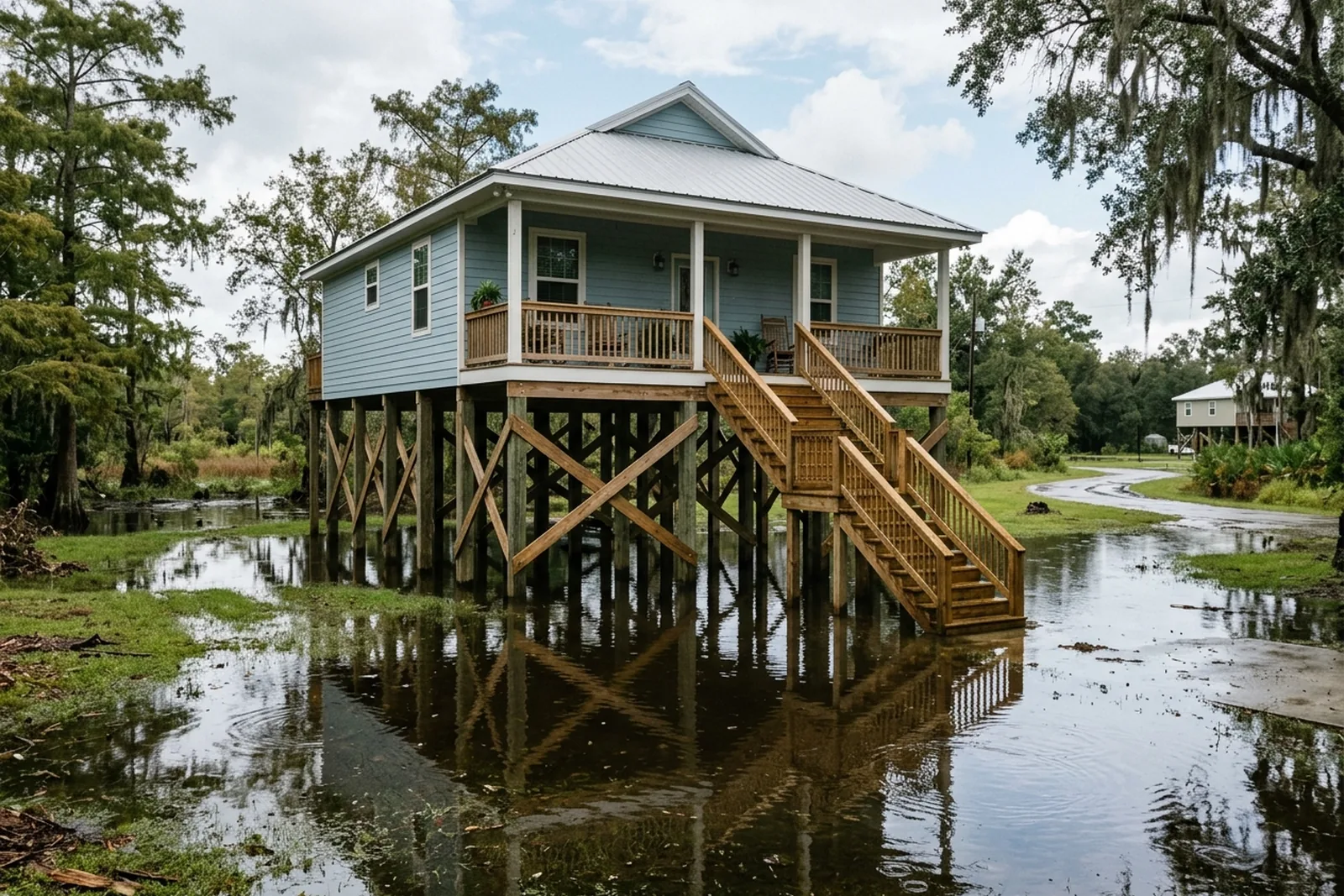
For many Slidell homeowners, flood insurance is the bill that finally makes house raising worth it. Raising the home can lower the premium, sometimes by a lot. Here is how that works.
How elevation affects your premium
Under FEMA’s current pricing approach for the National Flood Insurance Program, premiums reflect each home’s individual flood risk. How high the lowest floor sits relative to expected flood levels is a major factor. Raising the home reduces the chance that water reaches the living space, so the policy generally costs less.
The elevation certificate
An elevation certificate is prepared by a licensed surveyor and documents your home’s lowest floor height and the flood elevation for the lot. You’ll typically get one before the project (to plan the lift) and one after (to show the new height). Give the new certificate to your insurance agent and ask them to re-rate the policy.
Ask before you build
Before you commit to a height, ask your agent to quote the premium at a few different elevations. The difference between raising to the minimum and adding a foot or two of extra height can be meaningful, and the engineer can tell you what that extra height costs.
Don’t forget ICC
If a flood has substantially damaged your home, your NFIP policy’s Increased Cost of Compliance coverage may pay up to $30,000 toward elevation. See FEMA elevation grants for more, or request an estimate.
Common questions
Do I need a new elevation certificate after raising my house?
Yes. A licensed surveyor completes a new certificate showing the raised elevation. Your insurance agent needs it, and grant programs require it to close out the project.